Birthday Candle Number 9 Embroidery Review
As a designer who spends more time staring at stitch lines than sleeping, I approach every new digital file with a mix of curiosity and skepticism. We’ve all been there: you buy a cute design for a few dollars, hoop it up, and end up with a tangled mess or a shape that looks nothing like the preview. That is why I take Birthday Candle Number 9 seriously. It promises to be cheerful and cute, targeting that sweet spot of personalized gifting, but does it hold up under the needle?
I put this machine embroidery design through its paces, not just as a standalone image, but as a potential asset for real-world projects. Whether you are an Etsy seller looking to boost your shop’s visibility or a hobbyist making a one-off gift for a niece turning nine, the devil is in the details. Here is my practical breakdown of how this embroidery file performs when moved from screen to fabric.
First Impressions and Visual Personality
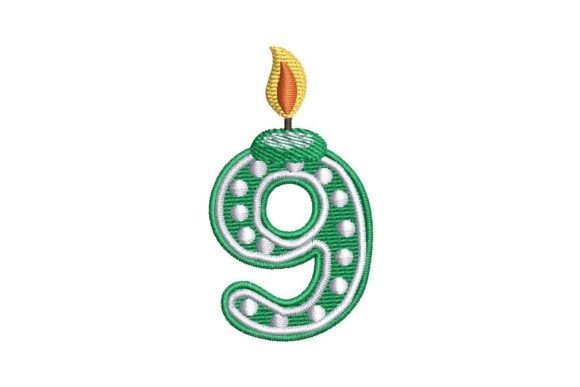
The moment you load the file into your digitizing software, the layout speaks for itself. The design centers on the numeral "9," stylized to resemble a birthday candle. This is a smart move. Pure numbers can feel stark and utilitarian, but adding the candle motif injects immediate warmth and celebration. It creates a mood that is undeniably festive without being overly cluttered.
From a design perspective, the visual personality of Birthday Candle Number 9 strikes a balance between playful and clean. It avoids the trap of being too childish while still retaining that essential "cute" factor mentioned in the product description. For a small business owner, this versatility is gold. It works equally well on a toddler’s onesie as it does on a teenager’s denim jacket or a parent’s kitchen apron. The shape is distinct enough to be recognizable even when stitched at smaller sizes, which is often the biggest hurdle with numerical designs.
The cheerfulness of the design translates well because it relies on clear geometry rather than intricate, fragile details. In embroidery, simplicity is often synonymous with quality. A design that doesn’t try to do too much usually stitches out more reliably, leaving less room for thread breaks or puckering.
Real-World Application Scenarios
Let’s talk about where this design actually lives. I imagine Birthday Candle Number 9 shining brightest in the realm of personalized gifts. Consider a scenario where you are preparing a custom embroidered tote bag for a friend’s daughter. You have a sturdy canvas tote, perhaps in a neutral beige or soft pastel. Stitching the number 9 here serves as the focal point. It is bold, legible, and instantly communicates the occasion.
Another strong use case is sweatshirt embroidery. As we move into cooler months, baby showers and first birthdays become top-of-mind for crafters. A soft cotton-blend sweatshirt featuring this candle design offers a cozy, high-value look. The design’s structure allows it to sit comfortably on the chest area or centered on the back, providing a professional finish that elevates the garment from basic to boutique.
For those running a craft business, this design is perfect for holiday embroidery collections. Birthdays happen year-round, but they cluster around certain times. Having a versatile number set allows you to create targeted listings for specific ages, capturing long-tail search traffic on platforms like Etsy. It transforms a generic item into a specific solution for a customer’s need.
It also works beautifully as an embroidered patch. If you are creating detachable patches for backpacks or jean jackets, the self-contained nature of the candle number means it likely has a good border or edge treatment. This makes it easy to iron or sew onto various surfaces, expanding its utility beyond just direct-to-garment decoration.
Where Caution Is Required
No design is flawless, and knowing where to draw the line is what separates a pro from a novice. While Birthday Candle Number 9 is robust, there are situations where you should exercise caution. First, avoid using this on highly textured fabrics like heavy bouclé or loose-weave linen unless you are prepared for the design to get lost in the weave. The clarity of the satin stitches or fill stitches can be compromised by uneven surfaces.
Similarly, thin fabrics pose a risk. If the stitch density is moderate to high, a lightweight t-shirt might pucker significantly if not backed with the proper stabilizer. Always test on scrap fabric first. Stretchy fabrics, such as spandex blends, require careful hooping and potentially a tear-away stabilizer to prevent distortion. If you are placing this on curved surfaces like caps, keep in mind that the flat representation of the number might stretch or warp slightly during stitching. Adjust your placement or consider a smaller hoop size to maintain tension.
Also, be mindful of dark fabrics. If the design uses light-colored threads, contrast becomes your enemy. Ensure your thread colors are chosen carefully to pop against the background. Conversely, if the design includes dark elements on black fabric, you may lose definition in the shadow areas. Testing in black and white mockups before stitching can help you visualize this contrast issue early.
Technical Performance and Product Value
When evaluating the technical side, we look at stitch density and detail resolution. Birthday Candle Number 9 appears to prioritize clarity over complexity. This is a wise choice for commercial embroidery. High-density designs consume more thread and time, driving up costs for both the maker and the buyer. By keeping the stitch count reasonable, this design allows for faster production runs, which is crucial for anyone selling handmade products at scale.
The visual appeal directly impacts customer trust. A clean, well-executed stitch job signals professionalism. When a buyer receives a personalized gift with a crisp number 9 that hasn’t shifted or bunched, their perception of your brand improves. They are more likely to leave positive reviews and return for future purchases. This design supports that goal by offering a straightforward path to a polished result.
However, remember that the file is only half the equation. Your choice of thread colors plays a massive role in the final aesthetic. Experiment with metallic threads for a celebratory shine, or stick to matte cottons for a softer, vintage look. The design’s flexibility allows for these creative variations without losing its core identity.
Practical Designer Notes for Success
To get the most out of this embroidery project, follow these best practices:
- Test First: Never assume a design will work perfectly on your target fabric. Run a test stitch on a scrap piece of the same material.
- Check Stabilizer: Use the correct type and weight of stabilizer. Too little, and you get puckering; too much, and the fabric feels stiff.
- Inspect Details: Zoom in on the digitized file. Are there any tiny, isolated stitches that might break? Are the corners of the number rounded off to prevent sharp points?
- Verify Licensing: Before selling finished items or digital assets, confirm the license terms. Some files are for personal use only, while others allow commercial sales.
- Mockup Wisely: Create printable mockups to show customers how the design looks on different garments. This helps manage expectations and reduces returns.
In conclusion, Birthday Candle Number 9 is a solid addition to any embroidery library. It is cheerful, functional, and versatile enough for a wide range of applications. By understanding its strengths and respecting its limitations, you can create finished products that delight customers and stand out in a crowded marketplace. It may seem like a simple number, but in the world of handmade goods, that simplicity is often its greatest strength.